


Table of Contents
ToggleThe five most common types of control valves used in industrial process control are globe valves, butterfly valves, ball valves, diaphragm valves, and plug valves. Each type is designed for specific flow conditions, pressure ranges, and media compatibility — selecting the wrong one can lead to process inefficiency, unplanned downtime, or equipment damage.
This guide helps procurement teams and process engineers compare all five types side-by-side, with a full spec table, selection criteria, and industry application examples.
For sourcing teams evaluating Chinese valve manufacturers, this guide also includes cost comparisons, API 6D certification requirements, and factory-direct procurement tips — information that general manufacturer blogs typically don’t cover.
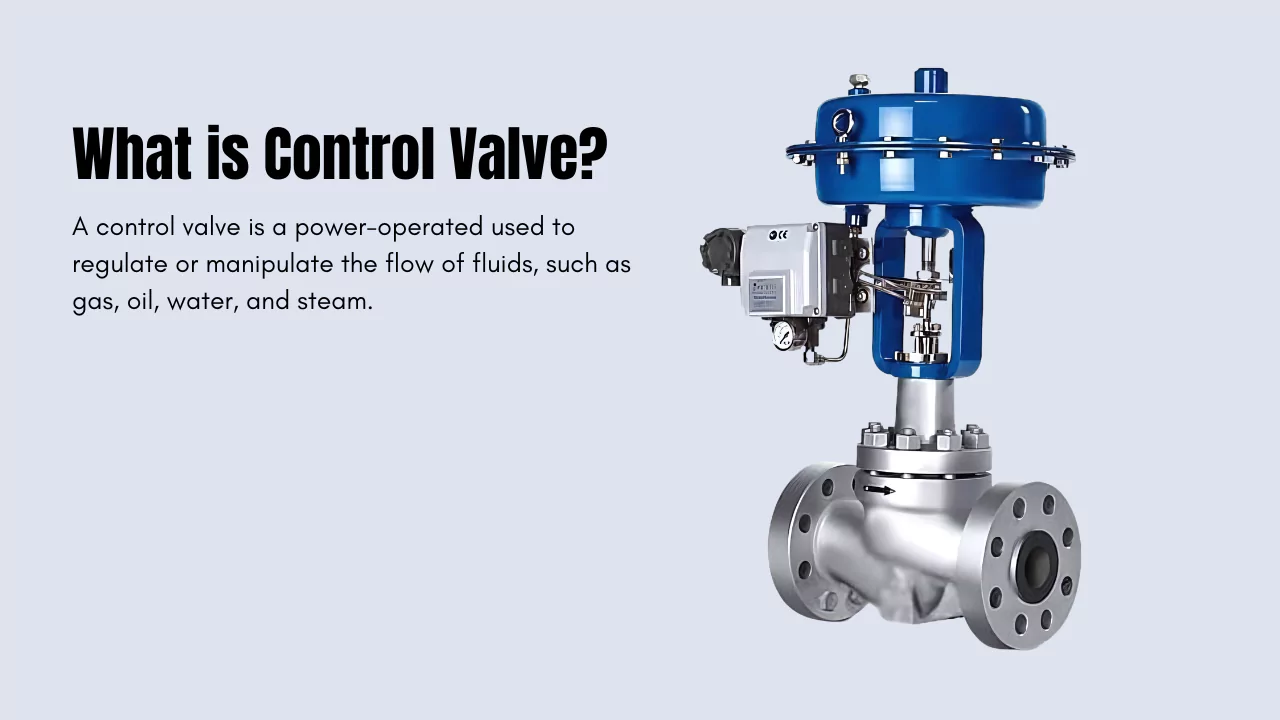
Control valves are the final control element in any process loop — they regulate fluid flow, pressure, and temperature based on signals from controllers, directly determining system efficiency, safety, and output quality.
For sourcing teams evaluating suppliers or procurement engineers specifying new installations, understanding the differences between valve types is the first step to avoiding costly mismatches. This guide covers the five most widely used control valve types, their operating characteristics, and the key factors that should drive your selection decision.
Quick selection chart: Need precise throttling → Globe Valve | Need large-diameter cost savings → Butterfly Valve | Need high-pressure isolation → Ball Valve | Need sterile/clean service → Diaphragm Valve | Need slurry/viscous fluids → Plug Valve.
Globe Valve
Best for precise throttling and frequent adjustments
Butterfly Valve
Best for large-diameter cost savings and low-pressure systems
Ball Valve
Best for high-pressure isolation and on-off control
Diaphragm Valve
Best for sterile, clean, and corrosive services
Plug Valve
Best for slurry, viscous fluids, and mining applications
Control Valve Types Comparison Table
| Valve Type | Control Accuracy | Motion Type | Fail Action | Signal Type | Pressure Range | Cv Range (2″ Valve) | Typical Industries | Key Note |
|---|---|---|---|---|---|---|---|---|
| Globe Valve | High Precise Throttling | Linear | Fail-to-Close / Fail-to-Open | 4-20mA, 0-10V, Digital | Up to 2,500 psi | 25-50 | Chemical, Steam Systems, Power Gen | Best for frequent adjustments; excellent modulating control |
| Butterfly Valve | Moderate | Rotary (90°) | Fail-to-Close / Fail-to-Open | 4-20mA, 0-10V, Pneumatic | Up to 300 psi | 80-150 | Water Distribution, HVAC | Large diameter, lightweight, cost-effective design |
| Ball Valve | N/A On-Off | Rotary (90°) | Fail-Safe (Spring Return) | On/Off, 4-20mA (Modulating) | Up to 10,000+ psi | 120-200 | Oil & Gas, High-Pressure Systems | Tight sealing; not recommended for throttling |
| Diaphragm Valve | High Precise | Linear | Fail-to-Close (Standard) | 4-20mA, Pneumatic | Up to 300 psi | – | Food & Beverage, Pharmaceutical | Ideal for sterile and clean applications |
| Plug Valve | Moderate | Rotary (90°) | Fail-to-Close / Fail-to-Open | 4-20mA, Pneumatic | Up to 6,000 psi | – | Petroleum Refining, Mining | Resists clogging; handles viscous fluids & slurries |
Common Types of Control Valves
Understanding the types of valves and their applications is essential for selecting the right one. Below are the five primary control valve types used across industrial processes:
Globe Valve
Globe valves are ideal for precise flow control. Their linear motion and throttling capabilities make them perfect for systems requiring frequent adjustments, such as steam or chemical flow regulation.
- Chemical flow regulation
- Steam system throttling
- Frequent adjustment loops
- High-pressure modulating control
Disadvantages: Higher pressure drop compared to rotary valves; larger body size; higher cost for large diameters. Typical Cv range: 25-50 for 2″ valve.
Butterfly Valve
Butterfly valves excel in low-pressure applications and large-diameter pipelines due to their lightweight design and cost-effectiveness. Best suited for on-off or coarse flow regulation.
- Water distribution systems
- Large-diameter pipelines
- HVAC flow balancing
- Budget-conscious installations
Disadvantages: Limited throttling precision; potential cavitation at partial opening; not suitable for high-pressure systems. Typical Cv range: 80-150 for 2″ valve. For a detailed comparison of lug vs wafer mounting styles, see our butterfly valve mounting guide.
Ball Valve
Ball valves are primarily used for on-off control. Their tight sealing capabilities and durability make them suitable for high-pressure and high-temperature systems. Not recommended for throttling.
- High-pressure isolation
- High-temperature systems
- Emergency shutoff
- Oil & gas pipelines
Disadvantages: Not suitable for modulating control; potential for seat wear at partial opening. Typical Cv range: 120-200 for 2″ valve. API 6D certification required for oil & gas pipeline applications.
Diaphragm Valve
These valves use a flexible diaphragm for precise control and are preferred in sterile or clean applications. The body cavity is isolated from the fluid, preventing contamination.
- Food & beverage processing
- Pharmaceutical manufacturing
- Biotech sterile environments
- Corrosive chemical handling
Plug Valve
Known for their simplicity and resistance to clogging, plug valves are ideal for handling viscous fluids or slurries. Their full-bore design minimizes pressure drop and allows easy pigging.
- Petroleum refining
- Viscous fluid transport
- Slurry and mining operations
- Applications requiring pigging
Flow Control Valves: What Are They?
A flow control valve is also called a regulating valve. It adjusts the rate of fluid flow in a system. These valves are crucial in processes requiring stable and accurate control of liquid or gas flow.
A pneumatic flow control valve is a combination of a valve and an actuator. This type of control valve uses compressed air to regulate flow. The design enables fast response times and high precision, making it ideal for automated systems.
Technically, a flow control valve regulates flow rate, which can indirectly influence pressure within a system. By restricting fluid movement, the valve can create a pressure drop upstream.
However, its primary function is not pressure reduction but rather flow management. If pressure regulation is a requirement, specialized pressure-reducing valves should be considered alongside flow control valves.
How Control Valves Manage Process Parameters
| Control Parameter | How Control Valves Manage It | Typical Valve Types Involved |
|---|---|---|
| Flow | Regulates the rate of liquid or gas movement to ensure stable and accurate process control. | Globe Valves, Butterfly Valves, Flow Control Valves |
| Pressure | Maintains system stability by creating controlled pressure drops during flow regulation. | Globe Valves, Ball Valves, Pressure-Reducing Valves |
| Temperature | Indirectly controlled by managing flow in high-temperature or steam-based systems. | Globe Valves, Ball Valves |
| Level | Typically controlled by adjusting inlet or outlet flow in tanks or vessels using level transmitters. | Level Control Valves, Globe Valves |
How to Choose the Right Control Valve
Selecting the right valve depends on several factors, including application, operating conditions, and fluid type. Here are the key considerations procurement teams and process engineers should evaluate:
1. Application Needs
Evaluate whether you need precise flow control, on-off functionality, or contamination prevention. For instance, diaphragm valves are excellent for sterile environments. On the other hand, ball valves are ideal for high-pressure on-off control.
2. Fluid Type
Corrosive fluids, viscous slurries, or clean gases all require different materials and valve designs. Plug valves excel with abrasive fluids, while butterfly valves suit water distribution systems.
3. Operating Conditions
Consider the pressure, temperature, and flow rate in your system. For example, globe valves are better for high-pressure systems requiring fine flow adjustments.
4. Actuator Type
A pneumatic flow control valve combines a valve and an actuator. Pneumatic actuators are best for quick, frequent adjustments. Electric actuators offer precise, automated control.
Industry Application Guide
| Industry | Typical Applications | Common Valve Types |
|---|---|---|
| Oil & Gas | Petroleum refining, high-pressure flow control systems. | Ball Valves, Plug Valves, Globe Valves |
| Chemical | Chemical flow regulation requiring precise throttling. | Globe Valves, Diaphragm Valves |
| Power Generation | Steam systems and high-temperature flow control applications. | Globe Valves, Ball Valves |
| Water Treatment | Water distribution pipelines and large-diameter flow systems. | Butterfly Valves |
| HVAC | Flow balancing and temperature regulation in climate control systems. | Globe Valves, Butterfly Valves |
| Offshore | Globe valves for gas lift control, ball valves for high-pressure isolation, and butterfly valves for cooling water. All must meet API 6A/6D subsea standards — widely used in FPSO topside piping systems. | Globe Valves, Ball Valves, Butterfly Valves |
Cost Comparison Quick Reference: Butterfly valves are typically 40-60% cheaper than globe valves of the same diameter. Ball valves cost 20-30% more than globe valves for high-pressure applications. Diaphragm valves carry a 15-25% premium for sterile-grade materials. For detailed pricing, request a quote with your specifications.
Control Valve Selection Decision Flowchart
Conclusion
Control valves are the backbone of industrial systems. They regulate flow, pressure, and temperature with precision. Choosing the right valve — whether globe, ball, butterfly, diaphragm, or plug — can transform efficiency and safety.
For over 16 years, Gowin Industrial Valve has delivered reliable, high-performance valves. Built to global standards including API6D, ISO9001, ISO14001, OHSAS45001, API607, and API6FA, Gowin valves meet the toughest demands. Trust Gowin for durable, efficient flow control solutions that keep your operations running smoothly.
Frequently Asked Questions
Globe Valves: Provide precise flow control and are used for throttling applications due to their linear motion design.
Ball Valves: Best suited for on-off control, especially in high-pressure systems, but less effective for throttling.
Yes, a butterfly valve can be used for flow control. However, it is typically more effective for low-pressure systems or on-off applications. For precise flow adjustments, a globe valve may be a better choice.
While its primary function is to regulate flow, it can cause a pressure drop upstream as it restricts the fluid flow. However, its primary function is not pressure reduction but rather flow management. If pressure regulation is a requirement, specialized pressure-reducing valves should be considered.
Cv (Flow Coefficient) represents a valve’s flow capacity at fully open conditions — defined as the GPM of water at 60°F that flows with a 1 psi pressure drop. Higher Cv = more flow capacity. Critical for sizing valves to match process requirements.
Linear valves (globe, diaphragm) move the trim in a straight line — ideal for precise throttling. Rotary valves (ball, butterfly, plug) rotate a closure element — offering faster actuation and lower pressure drop in large-diameter applications.
Globe valves are generally the best choice for high-pressure steam systems that require precise flow control and frequent throttling. Their linear motion design allows for accurate modulation of steam flow. For on-off applications in high-pressure steam lines, ball valves with appropriate temperature ratings are also suitable.
Pneumatic actuators use compressed air to drive valve movement and are best for quick, frequent adjustments in hazardous or explosive environments due to their inherent safety. Electric actuators use motors for precise, automated control and are preferred when complex positioning, feedback signals, or integration with digital control systems is required.
Source Control Valves from a Verified Manufacturer
GOWIN Industrial Valve supplies globe, ball, butterfly, diaphragm, and plug valves to customers in 30+ countries. All products meet API6D, ISO9001, and API607 standards. Standard catalog specs or engineered-to-order configurations available.


 CHINA
CHINA LIBERIA
 FRANCE
 BARBADOS
 KIRIBATI

